
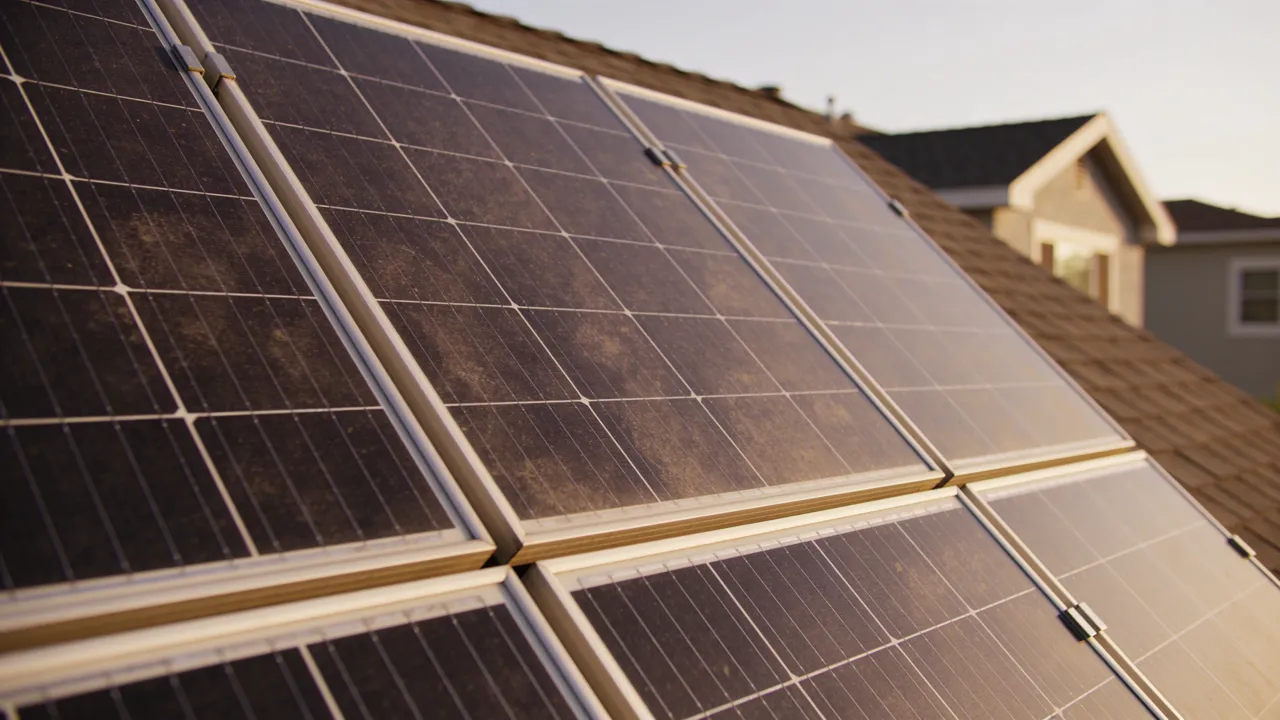
Solar panels that go years without a cleaning keep producing. The trouble is what rain leaves behind, and how long it sits there.
How much output do dirty solar panels lose?
With ordinary dust, the output loss is small. The UC San Diego team that tracked a dry summer across 186 California sites put the gain from a mid-summer wash on a typical home system at about $20 in electricity. The National Renewable Energy Laboratory (now the National Laboratory of the Rockies) puts yearly soiling losses at up to 7 percent in parts of the United States.
The same UC San Diego study named the exceptions. Panels heavily soiled with bird droppings should be cleaned, because droppings block nearly all sunlight and don’t wash away in the rain. In the same study, nearly flat panels, tilted under five degrees, lost more than steeper ones, and sites right beside a highway, factory or farm field could get dirty enough to need cleaning. That’s why we build cleaning schedules around droppings, pollen and ash, and treat plain dust as the minor part of the job.
What builds up on solar panels that are never cleaned?
Each year adds the same layers. Spring tree pollen sticks to the glass. Then come five or six months with little rain, when dust from roads and building sites settles on top. Birds leave droppings where they perch. In a fire year, ash lands on all of it. Winter rain takes some of the loose dust and leaves the rest for next spring’s pollen to land on.
Pigeons are their own problem. They nest in the sheltered gap between the panels and the roof, so droppings and nesting debris pile up where you can’t see them from the street. Bird proofing closes that gap with mesh around the edge of the array.
Doesn’t rain wash solar panels clean?
Rain cleans solar panels only partly. Rain and wind remove some loose dust, NREL noted, but panels cool at night and collect dew, and that dew can bond dust to the glass so it stays through a hard rain. NREL’s pollen study at five North Carolina solar plants found that rain removed some pollen, yet output never climbed back to its pre-pollen level. Droppings stay put.
Can bird droppings damage solar panels?
Bird droppings can damage solar panels. A dropping over part of a cell starves that cell of light, and a shaded cell can stop producing and start heating instead. Engineers call that a hot spot. A Politecnico di Milano hot-spot study lists unwashed bird droppings among the real-world causes and notes that a hot spot can damage a cell for good. So bird droppings get cleaned when they appear, not at the next scheduled visit.
How soon should wildfire ash come off solar panels?
Have wildfire ash washed off soon after a smoke event instead of waiting for the rains to start. Ash settles across the whole array as a fine film, and dew can set it the same way it sets dust.
When is a solar panel cleaning worth booking?
Book a cleaning when any of these is true:
- The panels have never been cleaned. Book the next late-spring or late-fall visit, then follow the twice-a-year schedule in our guide to how often to clean solar panels.
- You can see droppings on the glass, or birds are nesting under the array.
- Ash is on the panels after a smoke event.
- A film, or a dirt line along the lower edges, is still there after the first good rains.
- Production on clear days has dropped and stayed down, and your installer has ruled out an equipment fault.
Cracked glass, exposed wiring or loose mounts are a job for your installer or a licensed electrician, not a cleaner.
Total Solar Cleaning uses deionized water and soft brushes, with no chemicals and no pressure washing, following published manufacturer cleaning guidelines. Warranty terms are set by your panel maker. For homes with 10 to 40 panels, our published price is $175 to $350 per visit. Call (833) 444-4173 or send your address and panel count through the contact form.