
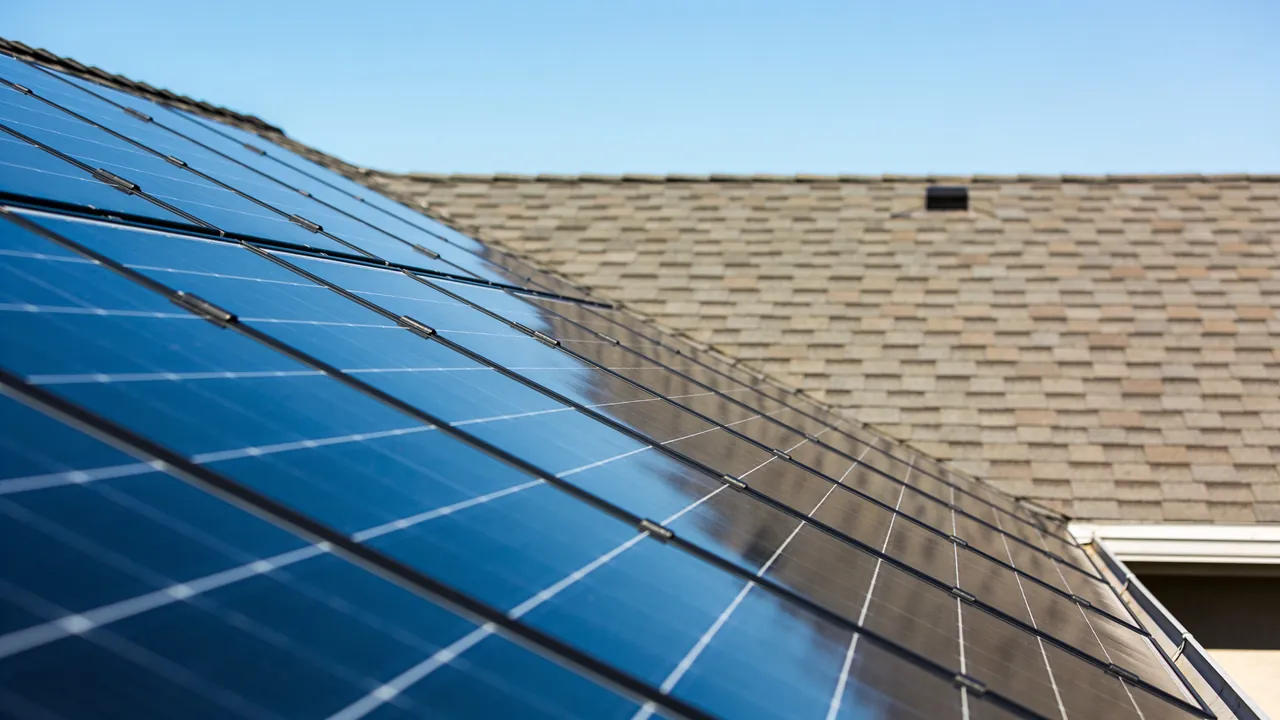
Your monitoring app shows output falling and the first thought is dirty panels. Sometimes it is. Often it is not. The shape of the drop tells you which, and reading it first saves you from paying for a cleaning that will not help.
Read the shape of the drop first
Open your Enphase, SolarEdge, or Tesla app and look at the daily production graph over the last few weeks. Two patterns matter. A sudden cliff, where output falls sharply from one day to the next and stays down, is almost never dirt. Dirt builds up slowly. A gradual slope, where each week produces a little less than the one before, is the signature of soiling.
Before you assume the panels need cleaning, rule out the faster and cheaper causes.
A sudden overnight drop is usually not dirt
When production falls off a cliff, look for a hardware or shading cause. A microinverter or optimizer can go offline, which drops one panel or one string while the rest keep working. A tripped breaker or a fault at the inverter can cut a section of the array. New shade also arrives suddenly in a homeowner sense: a tree that leafed out in spring, a new neighbor's addition, or a rooftop vent installed last month.
Panel-level monitoring makes this easy to see. San Ramon's newer systems with panel-level monitoring make it easy to spot whether one microinverter went offline or the whole array is simply dirty. If one panel reads zero while its neighbors read normal, that is a hardware or shading problem, not soiling, and cleaning will not touch it.
A slow week-over-week decline is usually soiling
Soiling is cumulative. Pollen in spring, dry dust through summer, and bird droppings year round settle on the glass and block light a little more each week. On the graph this reads as a gentle downward slope on clear days, not a single step down. Panels make power by letting light reach the cells, so anything on the surface that scatters or absorbs light lowers output. The basic physics of how a panel converts light to power is why a surface film matters.
Location shapes how fast this happens. In Concord, where spring pollen and summer dust build up gradually, a slow week-over-week production decline is usually soiling and responds well to a cleaning. Inland East Bay panels with no marine fog to rinse them accumulate faster than coastal ones.
How much output dirty panels actually cost
Be honest about the number, because vendor content tends to inflate it. A light, even film of dust costs a few percent. Heavier soiling, caked bird droppings, or a full season of pollen and ash without a rinse can reach the low double digits. A typical East Bay system produces 8,000 to 12,000 kWh a year, so a 5 percent soiling loss is roughly 400 to 600 kWh, which is real money on a PG&E bill but not the catastrophe some ads imply.
Bird droppings are the exception that punches above its size. A single dropping can fully shade one cell and drag down the whole panel it sits on, so a small amount of the right debris causes an outsized drop.
Check these before you call anyone
Five minutes with the app and a look at the roof answers most of it. Compare this month to the same month last year, since production naturally falls in winter from shorter days and a lower sun angle. Check whether the drop is one panel or the whole array. Look for new shade at the times of day when output dips. Confirm no inverter fault or error code is showing. If the whole array is down evenly, on clear days, with no shade and no faults, and the glass looks hazy, then soiling is the likely answer.
Shading is the most common false alarm. Walnut Creek homeowners with mature tree cover often see production dips that turn out to be afternoon shading rather than soiling, which a cleaning would not fix. If the dip lands at the same hour each day, suspect shade before dirt.
When cleaning will not fix it
Cleaning may recover output when a surface film was reducing light. It does nothing for an offline microinverter, a tripped breaker, an inverter fault, permanent shade, or the normal seasonal dip of winter. If any of those is the cause, a cleaning is money spent with no change on the graph. An honest cleaner will tell you that before booking the job.
When the diagnosis does point to soiling, a professional deionized-water cleaning brings the panels back to clear glass without the mineral film a garden hose leaves behind. Call (833) 444-4173 for a quote or to talk through what your monitoring data is showing. You do not need to be home for the cleaning itself.