
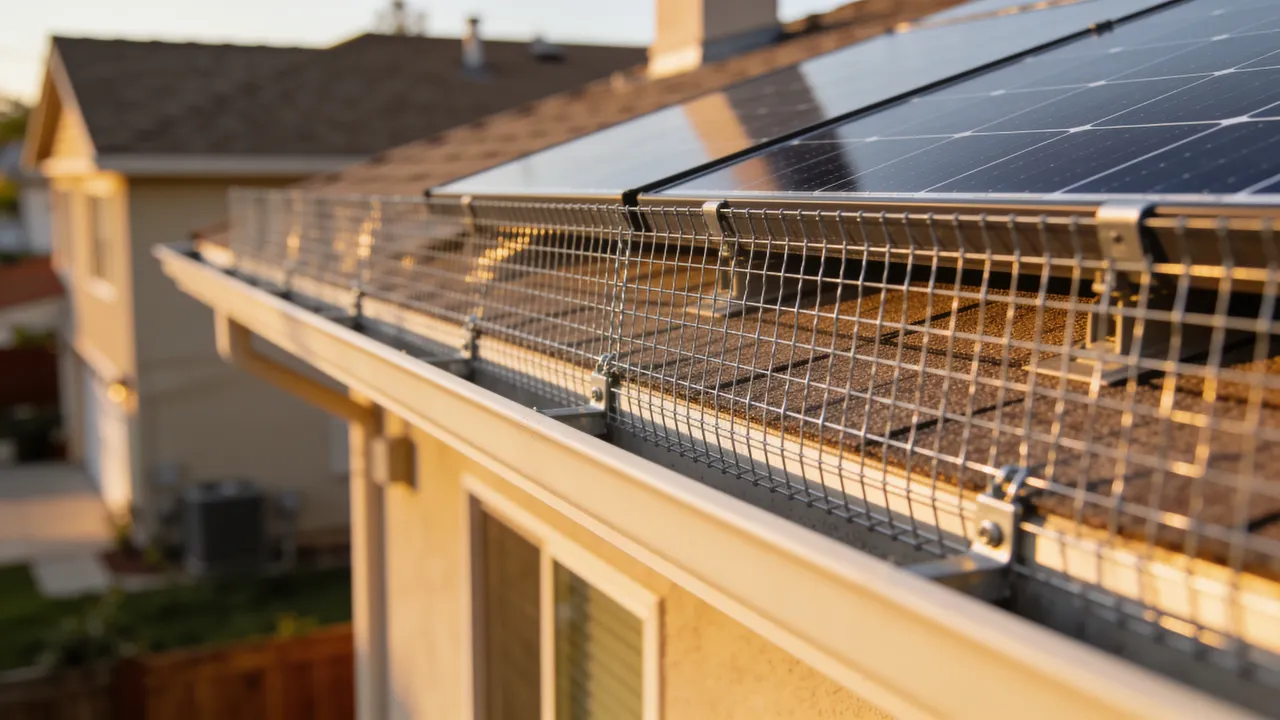
Pigeons find the space under rooftop solar panels quickly. Bird proofing seals it with a galvanized mesh guard. For most Bay Area residential systems, the cost runs $250 to $500 as a one-time installation.
What drives the price
Bird proofing is quoted by the perimeter of the array, not by panel count. The installer runs mesh along the gap between the bottom edge of the panels and the roof on all four sides. A larger array means more linear footage and a higher quote.
Roof access is the second factor. Single-story homes with a standard pitch are quick to work on. Two-story homes or steep-pitch roofs take longer to set up and carry a modest premium. Access difficulty drives more of the cost variance than array size in most cases.
If the panels have active nesting with debris underneath, a cleaning is usually needed before the mesh goes in. We include debris removal in the quoted price when we find it rather than adding a separate charge after the fact.
What the installation covers
Critter guard mesh, galvanized steel and UV-resistant, installs along the full perimeter of the array. Stainless steel clips attach to the panel frame without penetrating the panel. The mesh closes the gap between the bottom rail of the panels and the roof surface on all exposed sides.
Once installed, there is nothing to maintain. The mesh does not need annual inspection or replacement. It holds through the East Bay's heat, rain cycles, and dry Diablo winds without degrading. A properly installed guard should outlast the panels themselves.
What happens if you wait
Pigeon nesting creates two categories of cost. The first is recurring: cleaning bills. Nesting debris and droppings accumulate faster under an active colony than on a clean panel. A colony does not move on once established.
The second is potential equipment risk. Droppings concentrate in the gap between panels and roof. Uric acid in pigeon droppings is corrosive to metal and wiring over time. Nesting debris, mostly dry organic material, sits against electrical components. Bird proofing eliminates both risks in one installation.
Add up two or three cleaning visits per year on a colony-affected array and the one-time installation cost typically covers itself within 18 to 24 months, without counting equipment protection. For Antioch's newer solar installations, many from 2020 to 2023, nesting pressure has built up enough to warrant proofing on a significant share of roofs in the area.
Bundling with a cleaning visit
Bird proofing and solar panel cleaning may share part of the access setup. Ask for separate and combined quotes so the scope and any price difference are clear for your roof.
The bundle makes sense for most new bird proofing customers. A panel that has been under an active colony almost always needs cleaning first. The mesh goes on after the panels are clean and dry, which also lets the technician inspect the underside for wiring issues before sealing it off.
Brentwood homeowners near agricultural land deal with more nesting pressure than most East Bay cities because of the proximity to open fields and water sources that support large pigeon populations. Without bird proofing, homes in these areas tend to need cleaning more often.
Getting a quote
A bird proofing quote takes about two minutes by phone. Give us the number of panels, whether the roof is single or two-story, and whether you have seen active nesting. We quote a range on the call and give a fixed price on site before any work starts.
Concord properties near open green space and drainage channels see the highest pigeon pressure in the East Bay, and bird proofing inquiries are a steady part of our Concord residential schedule year-round.
Call (833) 444-4173 to schedule or get a quote. Commercial arrays qualify for the same installation. For more on what bird activity does to panels before proofing is installed, see the California Department of Fish and Wildlife guide on rock pigeons.