
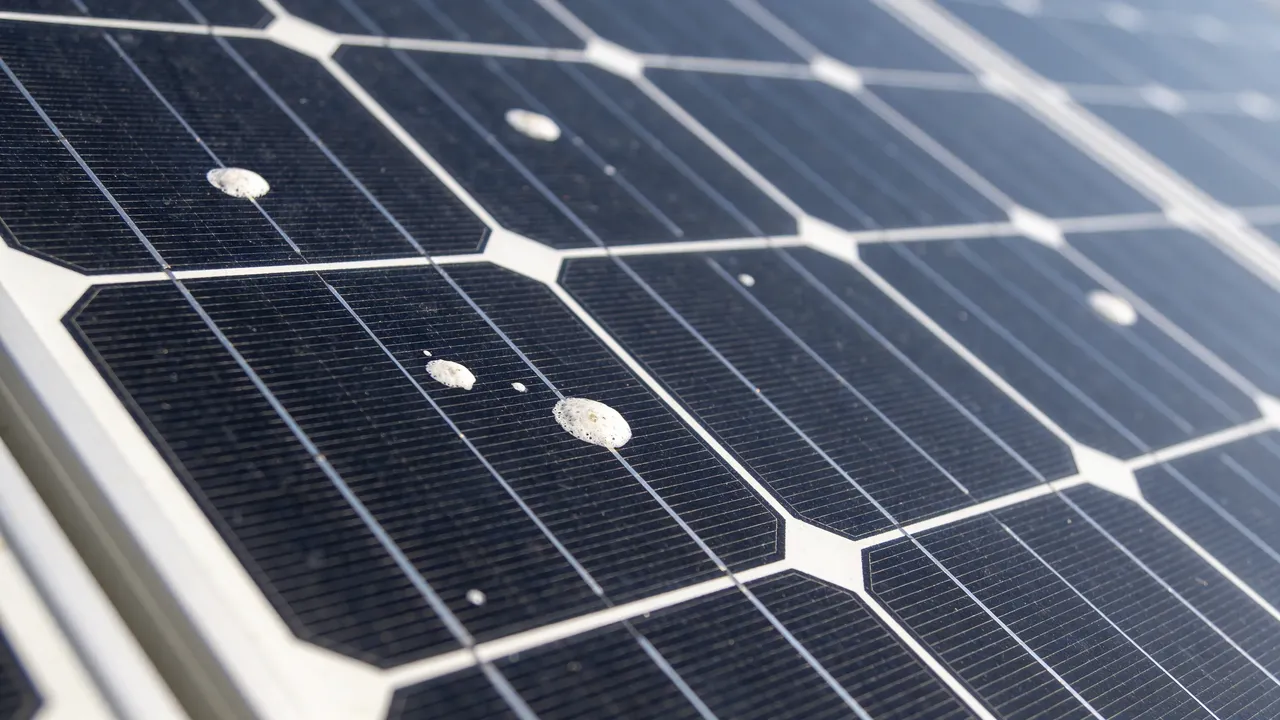
You can see the white streak from the driveway. You figure rain will take care of it. It won't.
Why bird droppings hit harder than dust
Dust reduces panel output by blocking light proportionally across the full panel surface. A 5% dust coating reduces output by roughly 5%. Bird droppings work differently.
A single dropping sits directly on one cell or a small cluster of cells, blocking them almost completely. That shaded cell doesn't just stop producing. Because solar panels are wired in series strings, a completely shaded cell can drag down the output of the entire string it belongs to. The performance impact is out of proportion to the physical area of the dropping.
Most panels include bypass diodes designed to partially compensate for cell-level shading. The mitigation is partial. A single large dropping can still drag down a panel's output until it's removed, and recurring droppings in the same spot cause permanent hot spots.
The hot spot problem
When a cell is heavily shaded while the rest of the panel is generating current, the shaded cell can go into what engineers call a hot spot: it absorbs current from the rest of the string instead of producing it, converting that energy to heat at the cell level. This stresses the panel physically and can degrade cell performance permanently over time.
Mitch McKay at Total Solar Cleaning has cleaned panels in East Bay neighborhoods where droppings in the same location, season after season, created cell-level discoloration that doesn't clean away. The shade from recurring droppings accumulates as long-term damage.
Why rain doesn't remove bird droppings
Bird droppings contain uric acid, undigested material, and fats. They're viscous when fresh and bond to warm glass quickly. Rain adds water but not the mechanical force needed to break that bond.
The uric acid in droppings also reacts with silica in solar panel glass over time, making the deposit more adherent rather than less. Waiting for rain to handle it is the wrong instinct. Regular dust loosens with moisture and can wash away in significant rainfall. Bird droppings get harder to remove the longer they sit.
East Bay birds and your solar panels
The East Bay has a year-round bird problem for solar panel owners. Pigeons, starlings, and house sparrows actively roost on and around solar panels. In late spring and early summer, panels can attract nesting activity under the panel frame.
Homeowners in Lafayette, Orinda, Danville, and the Lamorinda corridor deal with the highest bird activity because oak woodland habitat borders residential areas throughout. Red-tailed hawks also perch on rooftop panels as hunting vantage points, leaving large single droppings that cause significant cell-level shading.
Bay-adjacent cities like Hercules and Pinole deal with seabird activity on top of the standard pigeon population.
When to call vs. when it can wait
One small dropping on a panel that was recently cleaned: schedule cleaning within the next week or two.
Two or more droppings across multiple panels, or any droppings visible from the ground on a second-story roof: call soon. The urgency is different from general dust cleaning. Dust accumulates gradually and you can wait for a scheduled route. Bird droppings cause concentrated cell-level stress and the impact compounds with time. Don't wait for a natural rinse that isn't coming.
DIY removal: what works and what damages panels
You can attempt to remove bird droppings yourself if you have safe ladder access to a single-story roof. Method matters.
Do not use a dry cloth. Wiping dry droppings grinds uric acid crystals across the anti-reflective coating and scratches it. Soak the area with water first, let it soften for a few minutes, then wipe gently with a wet microfiber cloth and rinse thoroughly with more water.
Do not use a pressure washer. Pressure washing can crack panel frames, damage junction boxes, and void a manufacturer warranty.
For second-story roofs, steep pitches, or multiple panels affected, professional cleaning is the right call. Total Solar Cleaning uses deionized water and soft-bristle brushes that remove droppings completely without scratching the anti-reflective coating.
If droppings keep coming back
Recurring droppings mean birds are roosting or nesting near your panels. A one-time cleaning handles the deposits but doesn't address the source.
Total Solar Cleaning also installs critter guard bird proofing, which closes the gap between the panel frame and the roof surface and eliminates the nesting site. If you want cleaning and bird proofing in one visit, ask for separate and combined quotes.
Call (833) 444-4173 to schedule cleaning or request a bird proofing quote. We serve all of Contra Costa and Alameda Counties. You don't need to be home.