
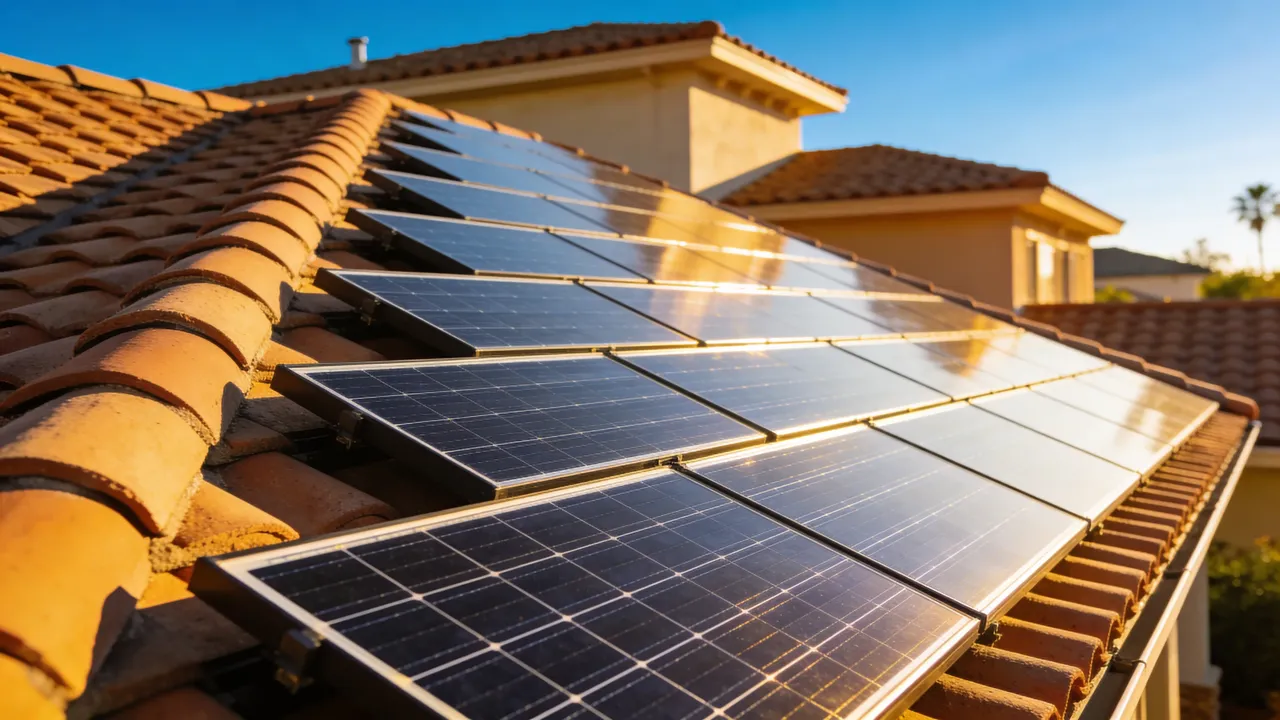
Most Bay Area homes need solar panel cleaning twice a year. The weather sets that pace: a pollen spring, a dry season with little rain from May to October, and a fire season that can leave ash behind.
The two cleanings: late spring and late fall
Book the first cleaning of the year in late spring, usually May or June, once tree pollen stops falling. Pollen sticks, and NREL’s pollen research at five North Carolina solar plants found that rain removed only part of it. Cleaning it off before the dry season sends the panels into their longest, sunniest months clear.
Book the second cleaning in late fall, usually October or November, after fire season winds down and before the winter rains. That visit takes off a whole summer of buildup, ash included. Gutters fill on the same fall calendar, and gutter cleaning can go on the same visit and the same quote.
Homes that need more frequent cleaning
Add a visit, or book one as soon as you see the problem, when any of these apply:
- Bird activity. UC San Diego engineers found that droppings block nearly all sunlight to the cells under them and don’t wash away in rain. Pigeons nesting under an array keep adding more, which is why bird droppings deserve their own visit.
- Trees over or beside the roof, which drop pollen in spring and leaves and debris the rest of the year.
- Nearly flat panels. The same UC San Diego study found that panels tilted less than five degrees lost more output, because dirt doesn’t slide off them.
- A freeway, factory, farm field or construction site nearby. The UC San Diego study found that sites right next to and downwind of a highway, factory or farm field could get dirty enough to need cleaning.
- Wildfire ash. Clean after any heavy ash fall instead of waiting for the fall visit.
Can you clean solar panels less often than twice a year?
Not as a routine. Even a steep, open array collects pollen in spring and dust and ash through the dry season, so keep both visits.
Plain dust alone costs little: in the UC San Diego study, a mid-summer wash on a typical home system was worth about $20 of electricity. Droppings, pollen film and ash are what the twice-a-year schedule is for, because rain leaves them behind, and droppings left long enough can damage a cell.
Does rain clean solar panels well enough?
Rain rinses off loose dust. It leaves bird droppings, much of a pollen film, and dust that dew has stuck to the glass. The National Renewable Energy Laboratory (now the National Laboratory of the Rockies) describes panels cooling at night, collecting dew, and the dust under that dew setting so firmly that even a strong rain won’t remove it.
Signs it’s time before the next visit
The signs that solar panels need cleaning show from the ground or an upstairs window: droppings, a gray or yellow film, or a dirt line along the lower edge of each panel. Stay off the roof. Then check your monitoring app. Compare clear days in the same season a few weeks apart, and look for a production drop that holds. If the app shows an alert or an inverter fault, call your installer first, since cleaning won’t fix equipment.
How often should commercial solar panels be cleaned?
Commercial arrays often run on a quarterly schedule, and our quarterly contracts come in about 20 percent below one-off pricing. DOE’s solar operations and maintenance resources tie soiling control to a planned maintenance program, and our guide to commercial cleaning frequency sets out how to choose an interval for a site.
For a home with 10 to 40 panels, our published price is $175 to $350 per visit. Call (833) 444-4173 or send your address and panel count through the contact form to set up a spring and fall schedule.