
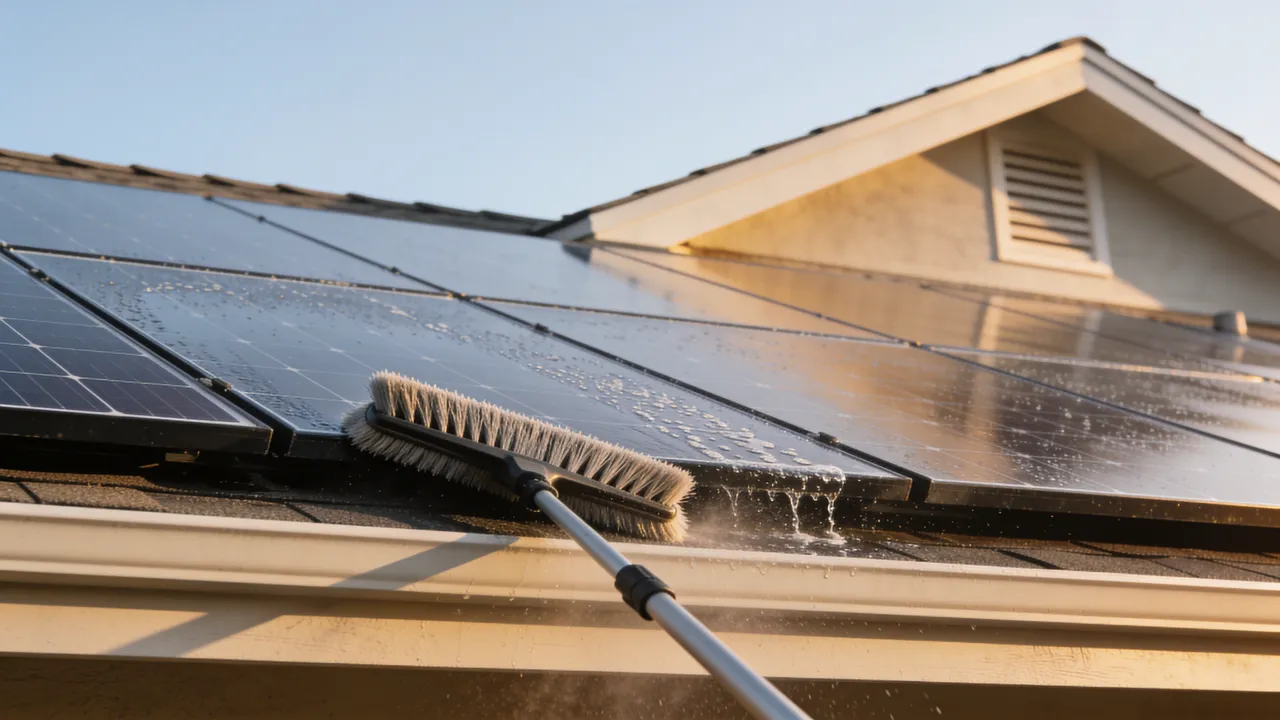
Midafternoon on an inland August day, the glass on a rooftop array is the hottest surface on the property. Spray it with cold water and a pane can crack.
What is thermal shock on a solar panel?
Thermal shock is damage from a fast temperature change. A material expands as it heats and contracts as it cools, so when one surface of a rigid object changes temperature faster than the rest of it, the difference turns into mechanical stress. On a solar panel, the surface in question is the front glass.
The front glass is tempered, low in iron, usually about 3.2 millimeters thick, bonded to the cells underneath with an encapsulant and set into an aluminum frame. Tempering makes the glass strong. Thermal shock stresses the pane in a way that strength does not cover. A panel warming through a long summer day and cooling overnight does that slowly, and the glass handles the cycle every day of its life. Water thrown onto glass that is already hot is the fast version, because the surface under the water loses heat while the rest of the pane holds it.
Panels make power by letting light reach the cells under that glass, which the U.S. Department of Energy's overview of photovoltaic technology explains in plain language.
Does cold water really crack solar panels?
The cool-hours rule exists for this reason, and the mechanism behind it is ordinary physics. The risk lives in the temperature difference across the glass, and cold water is one way to create one.
A hose on a cool morning rarely creates enough of a difference to matter. The glass starts out near air temperature, the water is close to the same, and the pane stays intact. The risk case is specific: glass that has baked in full sun for hours, and water arriving much colder than the surface it lands on. Inland East Bay summers produce that combination. A fog-cooled morning on the bay side of the hills does not.
Keep the fear at its real size. A pane cracked by thermal shock is the rare case. Panels break more often from a ladder leg set down on the glass, a dropped tool, a pressure washer driving water past the frame seals, an abrasive pad or a stiff brush taking the anti-reflective coating off the surface, or a boot on the panel itself. Two of those items, the pressure washer and the abrasives, are also what put a manufacturer warranty at risk, the subject of our post on soft washing versus pressure washing.
How can you tell if your panels are too hot to clean?
Feel the glass along the lower edge of a panel. If holding your hand there is uncomfortable, the array is hot enough to wait. Stay off the wiring, the connectors, and the junction box under the array. A rooftop system is a live DC circuit whenever the sun is up, and that is the part of the job the certification exists for.
Time of day and location settle most of the question. Midday is when the glass is hottest, and it is also when the array produces the most, so the heat and the output peak together. A mild June morning and a still, hot afternoon in Antioch are two different problems.
One detail is easy to miss. A hose left lying in the sun all day puts out water hotter than what comes off the tap, which helps a little. The window stays where it was.
When is it safe to clean solar panels?
Four conditions, and the answer is yes when all of them hold.
- The glass is at air temperature or only slightly warm to the touch.
- The array is out of direct sun. Morning, before the sun climbs onto the roof, and late afternoon into evening both qualify.
- The day is mild, not hot. Heat is the variable that moves the answer.
- The water going onto the glass is close to the glass temperature. Water that has been sitting in a shaded tank or a cold line is the biggest difference you can create.
Cleaning in the cool hours pays off for a second reason that has nothing to do with cracking. Water on hot glass flashes dry before it can rinse, and whatever was dissolved in it stays behind. East Bay Municipal Utility District water averages around 150 parts per million of dissolved minerals, and on hot glass those minerals dry into a film that blocks light. On cool glass the water has time to sheet off and carry them away. That is also why this method uses deionized water, held under 10 parts per million, which dries without leaving anything behind. The chemistry is in our post on deionized water versus tap water.
The months matter too, and they are a separate question from the hours. The guide on the best time of year to clean Bay Area panels covers which seasons to aim for. This covers which part of the day.
How do you clean solar panels without cracking anything?
The safe method removes the tools that do the real damage. Deionized water and a soft-bristle brush on a water-fed pole, worked from the ground or from the roof edge. No pressure washer. No abrasive pads, stiff brushes, acids, or household cleaners. Nobody walking on the glass. That combination is the published manufacturer cleaning guidance, and it is what an ISCA-certified crew trains on.
If you are doing the work yourself, the honest boundary is the one the DIY guide draws. A ground-mount array, or a single-story roof with a stable ladder position, is a case where a soft brush and distilled water are enough. A two-story roof with a steep pitch raises a fall-risk question, and the thermal-shock question is the smaller one at that height. The full breakdown is in our guide to what is safe to clean yourself and when to call a pro. Residential cleaning runs $175 to $350, and that number includes the fall protection.
What this looks like in Danville, Antioch, and Concord
Danville's inland summer sun bakes panel glass to its hottest, so the midday hose-down is the riskiest move there. Antioch's east-county heat means panels stay hot well into the afternoon, which pushes the safe cleaning window earlier or later. Concord's inland summers make the cool-hour rule matter most on the days when the glass has been in full sun.
Total Solar Cleaning cleans with deionized water and soft-bristle brushes, and books the work for the hours when the glass is cool. The crew is ISCA certified and carries $2 million in liability coverage. Call (833) 444-4173 for a quote, or request one online. You do not need to be home for the work.