
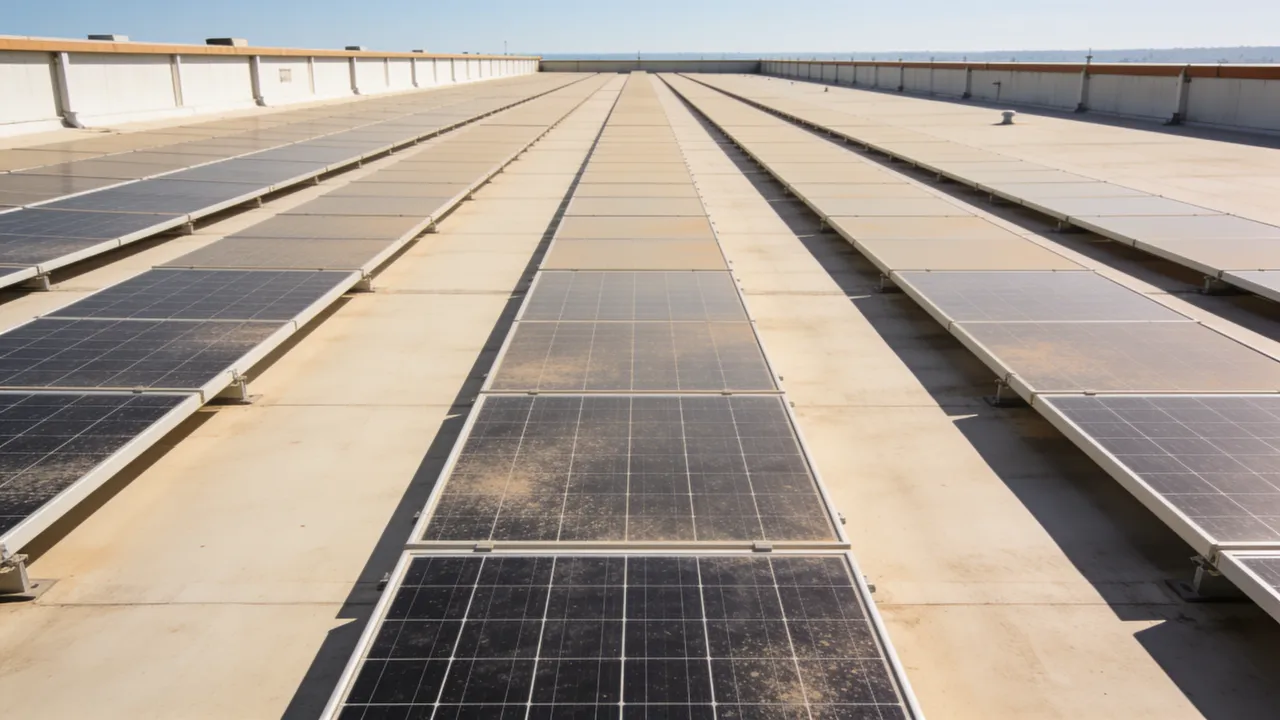
A facilities manager needs a schedule for the budget, but a calendar alone cannot tell whether a roof needs cleaning. Look at the glass, the site's history, and the cost of access.
What sets a commercial cleaning cadence
Soiling exposure sets it. Two arrays of the same size on the same street can land on different schedules, because the schedule follows what settles on the glass and panel count barely enters it. A roof next to an orchard or a busy truck route collects material every week. A roof on a clean-air office park collects far less of it.
The dry season is another input. Rain can clear some loose dust, but it is an unreliable cleaning schedule for every kind of buildup. The National Renewable Energy Laboratory's soiling research overview describes why operators compare measured losses with cleaning costs at their own sites.
When quarterly is the right schedule
Quarterly service fits a site with any of these conditions:
- Agricultural exposure: orchards, row crops, packing operations, or open dirt within a few blocks of the array.
- Bird activity: a colony roosting on or near the panels. Droppings do not rinse off in rain, and they shade the cells under them.
- Industrial particulates: nearby manufacturing, active construction, or heavy diesel traffic.
- A measured decline between visits: production data showing the array drifting down before the next scheduled clean arrives.
These conditions justify checking the site sooner. They do not prove that four visits will pay for themselves on every array.
When twice a year is enough
A roof with little surrounding dust and no recurring bird activity may need fewer visits. Ask what the crew found at the last cleaning and whether the next visit should move. Our residential guidance in how often to clean solar panels in the Bay Area covers different access and buying needs.
How to compare recurring and one-off quotes
Ask for a one-off quote and a recurring quote based on the same array, access plan, and documentation requirements. Routing and setup may affect the recurring price, but the difference depends on the site and agreed scope. Put any required completion record in the request so it is priced and delivered as part of the work.
A contract does not slow soiling down. Its value depends on whether the site needs repeat visits, what each visit includes, and whether the quoted schedule can change after inspection.
How to tell if your schedule is wrong
Read the production data alongside available cleaning records. A lower output reading can have several causes, so it cannot by itself set the cleaning frequency. Look for visible buildup and a repeated pattern between visits before changing the contract.
Then review the condition recorded at each visit. If every visit finds the array lightly soiled, the cadence is ahead of the site and you can stretch it. If the crew arrives to heavy buildup each time, or the first visit after a gap takes noticeably longer, the site is outrunning the schedule. The access tier matters here too: a walkable flat roof is cheap to add a visit to, and a multi-story array that needs a lift is not, so the calculation is different on the roof types we break down in our guide to commercial solar cleaning in the East Bay.
Where a fixed calendar breaks down
Frequency should follow observed soiling and production data. A vendor who names your cadence before seeing the roof or a year of your output is selling a calendar, and we would rather put a site on two visits and be asked to add a third than book four it does not need. A per-panel price quoted over the phone is the same warning sign for the same reason.
There is a limit on what any cadence buys you. Cleaning removes what is on the glass. Shading from a new structure next door, an offline inverter, and normal panel degradation are different problems, and a schedule built to chase a production drop with one of those causes will not recover it. The often-cited UC San Diego study measured panels through a long dry stretch and found they lost about 7 percent of output to accumulated dust, most of which a single rain restored. That result is real, and it is why the case for frequent commercial cleaning rests on concentrated soiling like droppings and ash rather than on diffuse dust. We work through the full argument in whether solar panel cleaning is worth it.
What four visits a year means on the roof
A quarterly schedule puts a crew on your roof four times a year over an energized PV system, so the credentials matter more at that frequency than at one visit. Total Solar Cleaning is ISCA-certified and carries $2 million in general liability coverage. Rooftop work falls under Cal/OSHA fall-protection requirements, and that obligation applies on every one of those visits.
Method matters more with frequency as well. We use deionized water, which holds under 10 ppm of dissolved minerals and helps avoid residue. The team can assess whether a robotic or crew method fits the array and its access constraints. Tell the team which work hours the site permits before they quote a recurring schedule.
What this looks like in Fremont, Hayward, and Walnut Creek
Fremont commercial arrays need site-specific access and soiling review before a quarterly schedule is justified. Hayward warehouse roofs need a look at access, nearby dust sources, and the last cleaning record. Walnut Creek office roofs can be reviewed against their own maintenance records.
Total Solar Cleaning quotes commercial work after seeing the roof and the access it needs, and after asking what the site puts on the glass. If you have production data or past cleaning reports, bring them to the call and we will build the cadence off those. Call (833) 444-4173 or use the commercial quote form.