
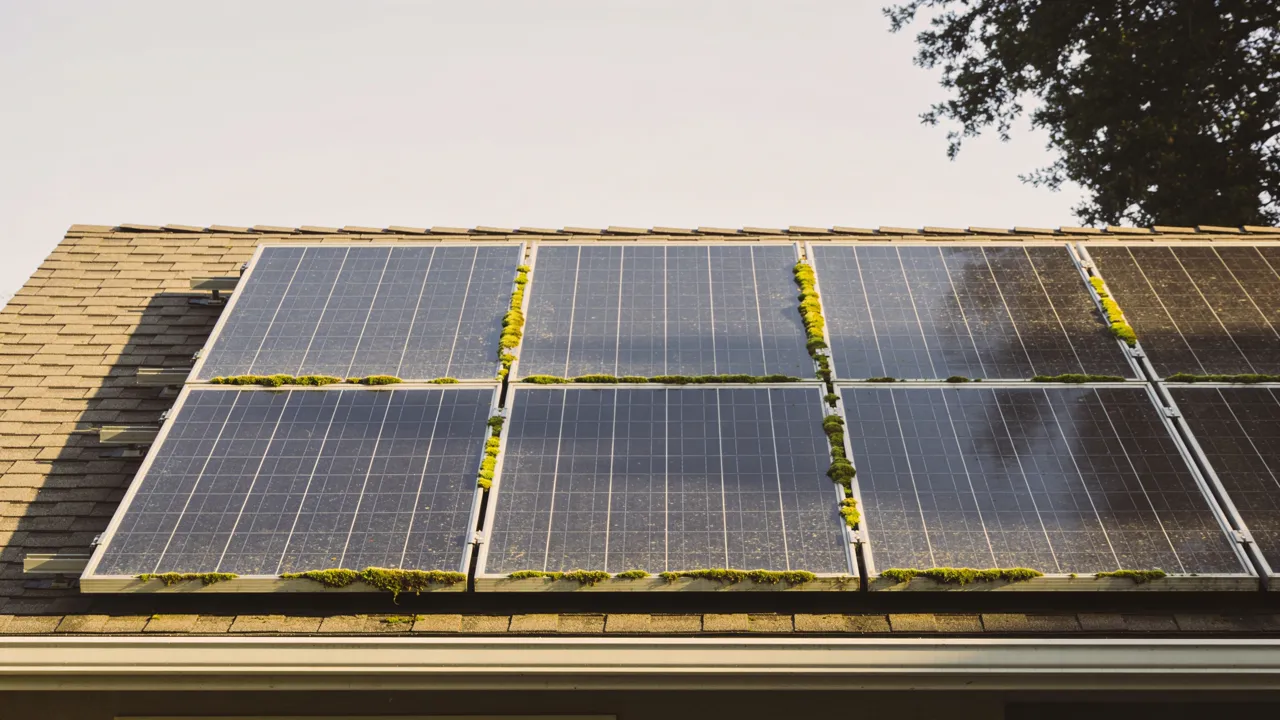
Green on your panels is not the same as dust. It is living growth that takes root where shade and moisture sit long enough, and it behaves differently from anything that rinses off in a storm.
What moss and algae actually are
Moss and algae are living organisms, not loose particulate. Algae shows up as a thin green or dark film across the glass surface, usually where moisture lingers. Moss is the fuzzy or leafy green growth that anchors itself to a surface and holds water against it. Both need two things your panels need to avoid: moisture that does not dry, and a surface organic enough to colonize.
On a clean solar panel, the glass is too smooth and too dry for either to establish. The problem starts when shade, morning fog, or overhanging debris keeps a section of the array damp for long stretches. Dust and pollen land on that damp glass, and the thin organic layer they leave becomes the foothold moss and algae grab onto. Growth does not land on clean glass. It lands on glass that is already wet and soiled.
Where growth shows up in the Bay Area
Moss and algae are a shaded-roof problem, and the Bay Area has plenty of those. The growth pattern tracks the shade. North-facing roof slopes that never see direct sun stay damp longest. Roofs under heavy tree canopy hold moisture and drop organic debris that feeds growth. And coastal-influenced microclimates, where morning fog sits on a roof until late morning, keep glass wet enough for algae to take hold even without direct shade.
The pattern is consistent. The panels that grow moss and algae are not the ones baking in full sun all day. They are the ones tucked under a tree line, facing north, or catching fog drip from a low coastal cloud layer. A south-facing array on an open, sun-baked roof almost never develops growth, because the sun dries the glass before anything can colonize it.
Why it starts at the frame line
Moss and algae almost always colonize the frame edge and gasket line first, not the center of the glass. The reason is structural. The aluminum frame sits slightly proud of the glass surface, so water pools and debris collects along that seam instead of sheeting off the way it does across the smooth center. That seam is where dust, pollen, and leaf fragments settle, stay wet, and turn into the organic base growth needs.
Once moss anchors to the frame line, it holds moisture against the gasket where the glass meets the frame. That is the sealed edge of the panel, the part that keeps water out of the laminate. Growth sitting on that seam blocks light. It also keeps the seal damp in a way the panel was not designed for.
Why it matters more than a dust film
A dust film dims the glass evenly. Moss and algae do not. They grow in patches and along edges, shading sections of the array unevenly and holding moisture that a dust film never does. The shading on cells near the frame line is the direct output cost. The moisture retention is the longer-term concern. Growth keeps the glass and the frame edge damp for days after the rest of the array has dried, which accelerates the breakdown of any organic soiling underneath it.
Growth also feeds itself. As moss and algae die back and regrow through wet and dry cycles, the dead organic material builds up at the frame line and adds another layer for the next round of growth to anchor to. The problem compounds where shade keeps the cycle going.
Why rain does not remove it
Rain rinses loose dust off smooth glass. Moss and algae are anchored to the surface, not sitting on top of it. A rainstorm that clears a dusty panel does nothing to growth that has established at the frame line. If anything, the wet cycle helps growth spread, because rain delivers the moisture it needs and then dries into a tighter film.
This is the same reason rain does not clean the rest of the soiling off your panels. We walk through the mechanics of why rain leaves the bonded layer behind in our post on whether rain cleans solar panels, and moss and algae are the clearest case of growth that rain cannot touch.
Why the removal method matters more than for dust
Growth that has anchored to the glass and frame edge does not rinse off, and the wrong approach to removing it does real damage. A pressure washer will blast moss off the glass, but it will also force water past the frame seal it was growing along, which is the exact failure mode that voids a manufacturer warranty. Chemical cleaners and abrasive scrubbing pads will scratch the anti-reflective coating, which is treated as panel damage by every major manufacturer.
The right method is soft washing with deionized water and a soft-bristle brush, the same warranty-safe approach we cover in our comparison of soft washing versus pressure washing solar panels. The brush lifts the growth mechanically without forcing anything through a seal, and the deionized water, held under 10 parts per million of dissolved minerals, rinses the organic residue away without leaving a mineral film behind. Because this method meets the manufacturer cleaning protocol by definition, it does not put the warranty at risk, the point we make in our guide to whether cleaning voids a solar panel warranty.
Total Solar Cleaning is ISCA certified, which means the crew is trained on cleaning protocols that follow manufacturer guidelines and the electrical safety required to work on a live PV system. That credential is what separates a growth-removal job done correctly from one that trades a moss problem for a warranty problem.
When the growth is a roof problem, not a panel problem
An honest line matters here. This post covers moss and algae on the panels themselves. Growth on the roof shingles around the array, moss working under the tiles, or organic buildup in the gutters feeding debris onto the roofline is a roofer or gutter question, not a solar cleaning one. A panel cleaning removes growth from the glass and frame edge. It does not solve a roof that is growing its own moss colony.
What a cleaning does address is the growth that has made it onto the panels from a mossy roof nearby. Wind and rain carry spores from roof shingles onto panel glass, and once those spores find a damp, soiled section of the array they colonize it the same way. Removing the growth from the panels restores the glass, even if the roof itself needs separate attention.
What this looks like in Pleasant Hill, Walnut Creek, and Concord
Pleasant Hill's mature tree canopy gives north-facing slopes the shade and moisture growth needs, so panels there develop moss and algae more often than arrays on open, sun-exposed lots. Walnut Creek's older, greener neighborhoods see growth start at the frame line on tree-shaded roofs, where the combination of canopy shade and morning dew keeps the glass damp enough for colonization. Concord's open, sunnier lots see less growth, but shaded sections of any roof can still hold it, especially on north-facing slopes or under a single mature tree.
Total Solar Cleaning removes moss and algae from solar panels with the same deionized water and soft-brush method used on every job, and it leaves the glass and the warranty intact. Call (833) 444-4173 to schedule a cleaning or request a quote online. You do not need to be home for the work itself.